Functional Prototyping with SLS 3D Printing
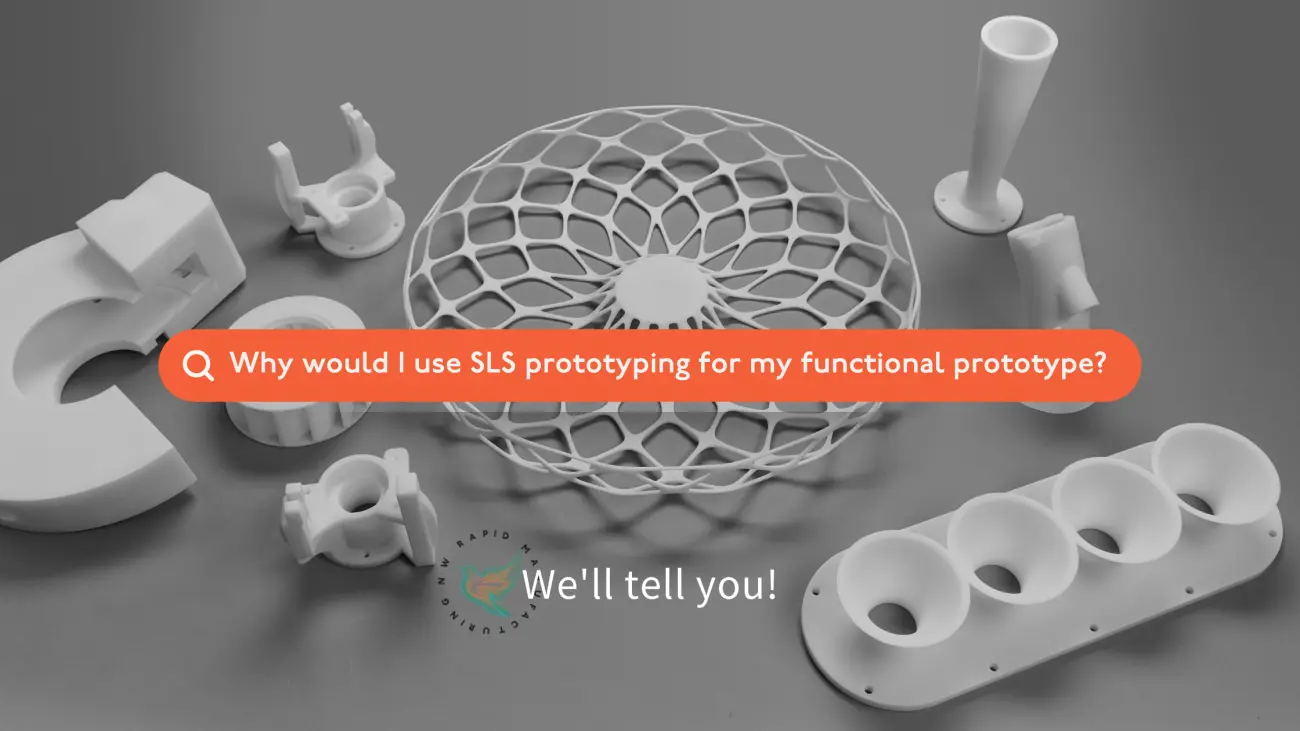
Functional Prototyping with SLS 3D printing
See How Your Design Works Before You Commit
You can stare at a CAD model all day. Eventually, you need to hold the part in your hands, put it where it belongs, and find out what happens when reality gets involved.
That’s where a functional prototype earns its keep.
There are plenty of ways to build a prototype, including several 3D printing technologies. The best process depends on what you need the prototype to do. If you need a part that can be assembled, tested, handled, modified, and evaluated in real-world conditions, Selective Laser Sintering (SLS) 3D printing is a particularly useful option.
We know we have a slight bias here. We specialize in SLS prototyping, after all. So instead of telling you that SLS is wonderful simply because we say it is, let’s look at a real-world example.
We talked with Senior Aerospace Engineer Chris Pellegrino at our sister company, Northwest UAV (NWUAV), about how the company uses SLS 3D printed functional prototypes to develop UAV propulsion systems. NWUAV designs and manufactures propulsion systems for unmanned aerial vehicles, and its NW-88 Engine, like the NW-44 Engine before it, has relied on functional prototypes throughout development.
The interesting part? Some of those prototypes didn’t just help develop the final parts. They became the final parts.
What Is a Functional Prototype?
A functional prototype is a physical version of a CAD-designed component that incorporates the essential features and capabilities needed to evaluate how the finished product will work.
In other words, it needs to do more than look good on a table.
For NWUAV, a functional prototype is often the complete component. Because some components ultimately use the same SLS manufacturing process, the prototype can be subjected to serious testing before and during production. That can include engine test-stand testing and actual flight testing.
But a functional prototype doesn’t always have to be a complete production component. Nor does it have to be manufactured using the same process as the final part.
For example, a consumer product developer might use a simplified prototype to evaluate how one component fits into a larger assembly. Once the design is proven, the production component might be manufactured using injection molding, machining, or another process.
The goal is the same: find out how the design works before investing heavily in production.
Why Use SLS for Functional Prototyping?
Here’s where things get interesting.
With SLS 3D printing, you can produce durable, complex parts directly from CAD data without the tooling, molds, or extensive fixturing required by many traditional manufacturing processes.
That gives engineers room to experiment. And during product development, experimentation is usually a good thing. Expensive surprises are not.
A Real-World SLS Prototyping Example
Look at NWUAV’s NW-44 Engine.
Every component that ultimately entered production as an SLS part began as a functional prototype produced by NW Rapid Manufacturing. That included components such as the cooling shroud and puck.
Another useful example is aircraft integration.
Imagine you need to determine how electrical harnesses and fuel lines will route around an aircraft fuselage. The CAD model can show you where everything is supposed to go. It can’t always tell you how easily a technician can physically bend a harness around an obstruction, where it should be secured, or whether the available space works in the real world.
You could wait until every component is available and assembled.
Or you could print a functional prototype of the relevant section of the fuselage and start working through the problem immediately.
That difference matters when components are expensive, production schedules are tight, suppliers are slow, or the part you need hasn’t been manufactured yet.
A physical prototype lets engineers test the design in the real world without waiting for the entire system to catch up.
5 Reasons Engineers Choose SLS Functional Prototypes
Design Freedom Without the Usual Manufacturing Headaches
With SLS 3D printing, you can ditch traditional molding limits and build complex geometries, internal features, and consolidated parts straight from your CAD model. Finally, test the exact design you actually envisioned—because, wild concept, that’s kind of the whole point of prototyping!
Make Design Changes Without New Tooling
Design changes are inevitable—calling them "unexpected" doesn't change that. Luckily, SLS 3D printing makes rapid design iteration painless. Just update your CAD file and run the next prototype without pricey tooling costs or rebuilding molds. Moving a feature 3mm shouldn't feel like a life event!
Reduce Prototype Cost and Part Complexity
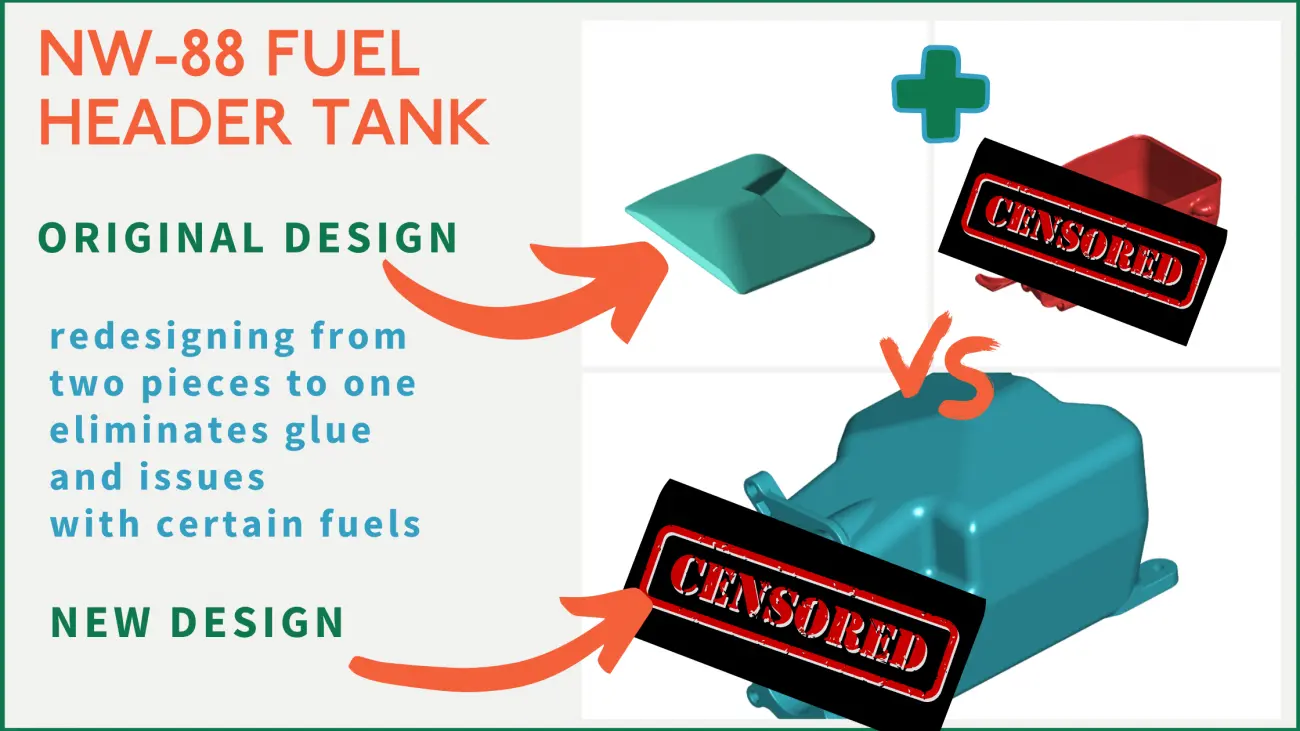
Consolidating multi-piece assemblies into single SLS 3D printed parts cuts drawings, part numbers, and assembly time—eliminating that one tiny, rogue component everyone blames when things go wrong. For high-volume projects, Northwest Rapid Manufacturing leverages SLS prototyping to stress-test designs fast before you drop serious cash on injection mold tooling.
Get a Prototype Faster
Speed is the ultimate superpower in SLS 3D printing. At NW Rapid Manufacturing, we help you launch from CAD file to physical prototype before your coffee even cools, letting you spot design flaws when they're still quick—and cheap—to fix. Why waste precious time when you can test faster?
Create Mock-Ups When Parts Aren’t Available
When missing parts hit your timeline like a brick wall, SLS 3D printing from NW Rapid Manufacturing acts as your ultimate cheat code. Instead of twiddling thumbs while aluminum components sit in manufacturing limbo, you can print functional stand-ins to keep assembly lines rolling and engineers sane.
How Do You Choose an SLS Prototyping Partner?
Choosing an SLS 3D printing service is about more than finding someone who owns an SLS machine.
Process control matters. Material quality matters. Machine settings matter. Dimensional accuracy matters. And experience matters when your design pushes the limits of what the process can reliably produce.
Chris explained why NWUAV continues to work with NW Rapid Manufacturing:
NW Rapid pays very close attention to the quality of the powder that they use as well as the machine settings. This attention to powder quality is crucial if you want parts that don’t come apart. NW Rapid knows the process extremely well and can inform us if the size tolerance we want is too tight or can be held tighter. They are also continually exploring other post processes that add more capabilities and quality to the finished part that helps us achieve better overall designs.
A good SLS manufacturing partner should be able to tell you what the process can do, where the limits are, and when a design may need to change to achieve the result you want.
You want more than a vendor who presses “print.” You want a manufacturing partner who understands what happens between the CAD file and the finished part.
Find the Right Process for Your Prototype
SLS is only one way to manufacture a functional prototype. Depending on the application, materials, tolerances, surface requirements, production volume, and intended use, another manufacturing process may be the better choice.
But when you need fast, cost-effective functional prototypes with complex geometry, SLS 3D printing deserves serious consideration.
It gives engineers design freedom, supports rapid iteration, reduces the need for tooling, and can produce functional parts that can be assembled and tested in the real world.
Most importantly, it lets you learn something about your design before you make a much larger investment.
And that is really what a good prototype is supposed to do.
Ready to Put Your Prototype to the Test?
If you’re developing a new product, refining an existing design, or solving an engineering problem that CAD alone can’t answer, SLS functional prototyping can give you a physical answer faster.
At NW Rapid Manufacturing, we specialize in Selective Laser Sintering 3D printing for functional prototypes, rapid prototyping, and production parts.
Send us your CAD file, tell us what you need the prototype to accomplish, and let’s see what we can build.