
How SLS 3D Printing Lowers B2B Production Costs
How SLS 3D Printing Lowers B2B Production Costs
Spend Less. Build More. Worry Less.
Every manufacturer wants to lower production costs. The trick is knowing where the real money goes.
It's rarely the cost of a single part. Tooling, inventory, long lead times, engineering changes, warehousing, shipping, and wasted material often have a much bigger impact on your bottom line. Those hidden costs add up faster than someone saying, “We just need one more design revision.”
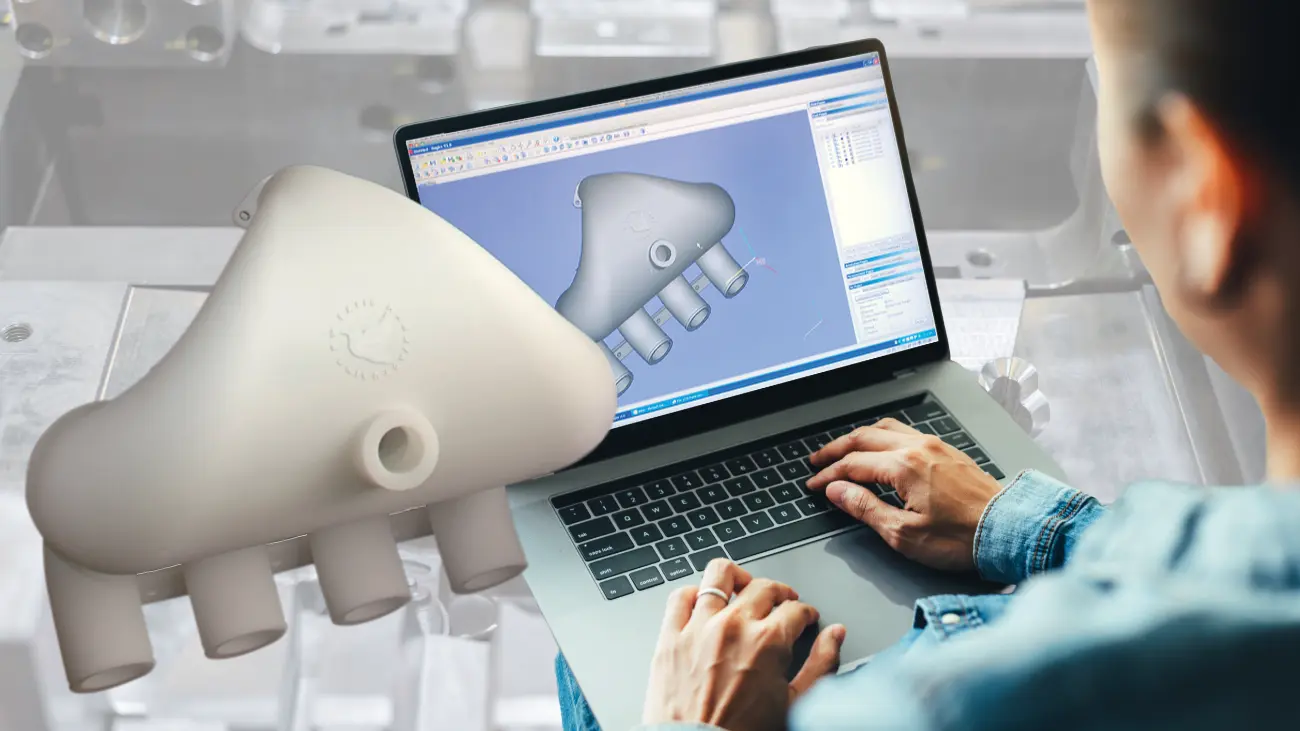
Selective Laser Sintering (SLS) tackles these expenses from multiple directions. Instead of investing in expensive tooling and waiting weeks for production to begin, SLS builds durable nylon parts directly from your CAD files. That means fewer delays, greater design freedom, and lower overall manufacturing costs.
Whether you're developing prototypes, producing functional parts, or running low-to-medium production volumes, SLS helps your budget work as hard as your engineering team.
Skip Tooling Costs with SLS 3D Printing.
Traditional manufacturing usually starts with molds, dies, fixtures, and specialized tooling. Before the first part leaves the shop, you've already made a significant investment.
SLS removes that barrier entirely.
Because parts are printed directly from digital models, there's no tooling to purchase, modify, or replace. Engineers can update designs without starting over, products reach production sooner, and revisions become far less expensive. Instead of waiting on tooling, your team can focus on solving problems and moving projects forward.
Why Low-Volume SLS Production Runs Make Financial Sense.
Injection molding shines when you're making thousands of identical parts. But if you're producing hundreds—or even dozens—that expensive mold becomes difficult to justify.
That's where SLS excels.
Without tooling costs to recover, production costs remain predictable from the first part to the last. You can manufacture exactly what you need without committing to large production runs or filling shelves with inventory you hope someone orders later.
This makes SLS an excellent choice for functional prototypes, custom components, replacement parts, engineering validation, and bridge production before full-scale manufacturing begins.
Fit More Parts into Every Build.
An SLS printer doesn't think one part at a time.
Because parts are nested throughout the entire build chamber, dozens—or sometimes hundreds—of components can be produced in a single build. Every available inch of the build volume works for you.
Higher build utilization spreads operating costs across more parts, reducing the cost per component while increasing productivity. It's a bit like fitting everyone's luggage into one suitcase—except this actually works.
Digital Inventory: Reduce Warehousing Costs with On-Demand SLS.
Inventory ties up cash, warehouse space, and patience.
SLS supports on-demand manufacturing, allowing parts to be produced only when they're needed. Instead of filling shelves with products that may sit for months—or years—you can store qualified CAD files and manufacture parts as orders arrive.
Producing on demand helps reduce inventory carrying costs, eliminates obsolete stock, improves cash flow, and makes legacy replacement parts available long after traditional tooling has disappeared.
Sometimes the smallest warehouse is the folder on your server.
Shorten the Supply Chain.
Long supply chains create opportunities for delays, rising transportation costs, and unexpected disruptions.
SLS allows manufacturers to produce parts closer to where they're will be used, reducing dependence on centralized production and simplifying logistics. Shorter supply chains often mean faster deliveries, lower freight costs, and fewer headaches when global events decide to interfere with your production schedule.
For many companies, these operational savings become just as valuable as the manufacturing savings.
Waste Less Material.
Traditional machining starts with a block of material and removes everything that doesn't look like the finished part. That's effective—but not especially efficient.
SLS uses only the powder needed to build the component. Much of the unused powder can be refreshed and reused in future builds, reducing material waste while improving overall material efficiency.
Less waste means lower material costs and a manufacturing process that's easier on both your budget and your sustainability goals.
Design Better Parts for Less.
Complex assemblies can quietly drive up manufacturing costs.
More parts mean more machining, more fasteners, more assembly time, and more opportunities for something to go wrong.
SLS allows engineers to consolidate multiple components into a single printed part while creating internal features and complex geometries that conventional manufacturing often struggles to produce.
Fewer components lead to simpler assembly, lower labor costs, lighter products, and improved reliability. Sometimes the best way to save money is to eliminate half the parts before production even starts.
Get Products to Market Faster.
Time has a price tag.
Waiting weeks for tooling can delay testing, product launches, and customer approvals. SLS compresses that timeline by producing functional prototypes and production-ready parts directly from CAD models in just days.
Faster iteration allows engineers to validate designs sooner, gather customer feedback earlier, and make improvements without expensive tooling modifications. Every shortened design cycle creates another opportunity to reach the market ahead of the competition.
When SLS Delivers the Best Value.
SLS isn't designed to replace every manufacturing process—and that's a good thing. Every technology has its strengths.
SLS delivers exceptional value when projects involve low-to-medium production volumes, complex geometries, custom products, engineering prototypes, bridge manufacturing, replacement parts, or lightweight functional components. In these applications, the savings from eliminating tooling, reducing inventory, and accelerating development often outweigh the higher per-part costs associated with traditional high-volume production methods.
Lower the Total Cost—Not Just the Part Price.
The cost of a part is only one piece of the equation.
The real value of Selective Laser Sintering comes from reducing expenses throughout the manufacturing process. Eliminating tooling, shortening lead times, reducing inventory, simplifying supply chains, minimizing material waste, and accelerating product development all contribute to a lower total cost of ownership.
If your goal is to build smarter—not simply cheaper—SLS offers manufacturers a faster, more flexible way to produce high-quality parts while keeping costs under control. That's the kind of math every production manager likes.
How SLS Lowers B2B Production Costs FAQ
1 How does SLS reduce manufacturing costs?
SLS eliminates tooling, reduces inventory, minimizes material waste, and shortens lead times, making it a cost-effective solution for prototypes and low-to-medium production volumes.
2 Is SLS cheaper than injection molding?
For prototypes and low-volume production, SLS is often more economical because it avoids expensive tooling. Injection molding generally becomes more cost-effective at very high production volumes.
3 What industries use SLS production parts?
SLS is widely used in aerospace, medical devices, industrial equipment, robotics, consumer products, and automotive applications that require durable, functional nylon components.
4 What materials are used in SLS?
Common SLS materials include Nylon 11, Nylon 12, glass-filled nylon, carbon-filled nylon, and flame-retardant polyamides, each selected for specific mechanical and environmental performance requirements.
For more information on these materials or to see what else we offer, check out our SLS materials page. Every project is unique, which is why you need to be selective with your materials. If you’re unsure which material is best for your product, we’ll help you determine the right choice. contact our team to witness firsthand how we can bring your imagination to life! Request an SLS 3D printing quote and upload your CAD files today!