
Designing SLS Living Hinges & Snap-Fit Joints
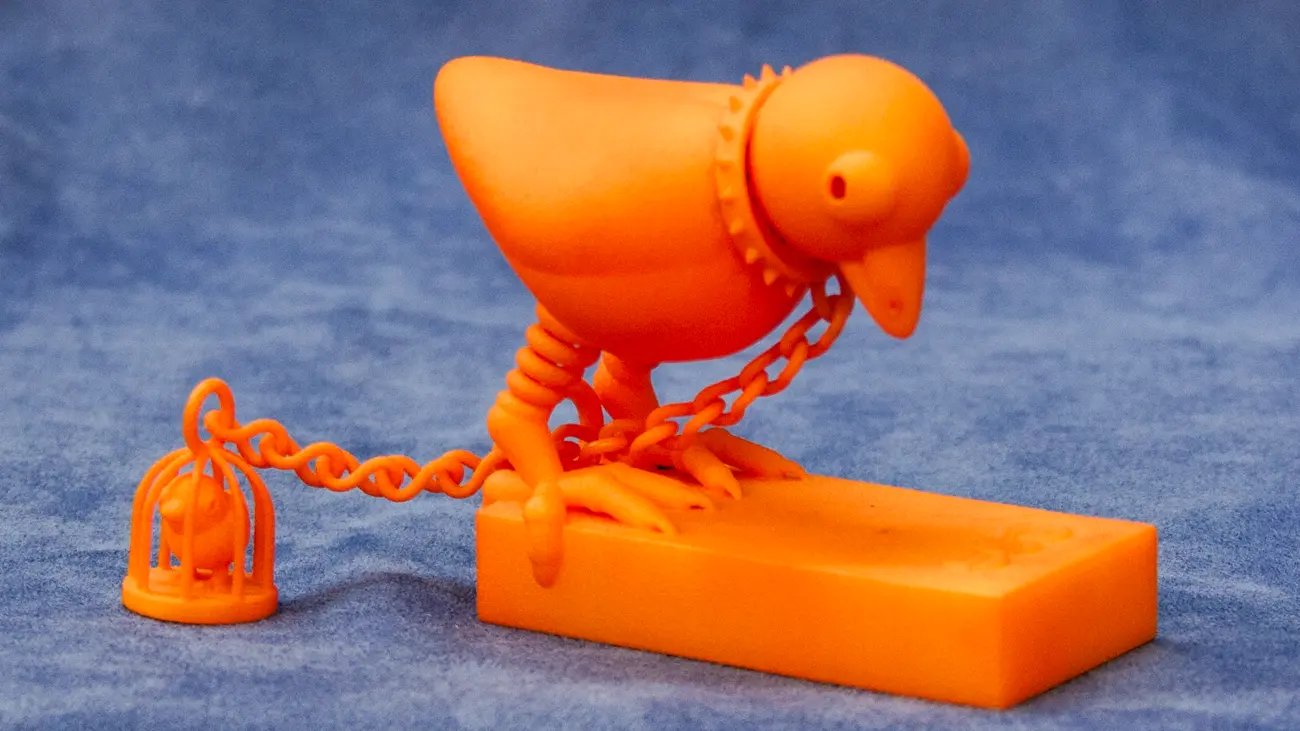
Designing SLS Living Hinges & Snap-Fit Joints: Nylon 11 vs. Nylon 12
Designing living hinges and snap-fit joints for Selective Laser Sintering (SLS) doesn't have to feel like crossing your fingers and hoping for the best.
The secret is choosing the right material from the start. This article explains why Nylon 11 is the go-to choice for parts that bend, twist, and snap back into action, while Nylon 12 shines in more rigid applications. You'll also discover practical design tips for living hinges, cantilever clips, annular rings, torsional joints, U-shaped clips, and L-shaped latches. Think of it as a field guide to avoiding cracked prototypes, frustrating redesigns, and those “well…that didn't work” moments. Follow these proven design practices to create stronger, longer-lasting SLS parts that perform as designed—cycle after cycle.
Unlocking Better Living Hinge Lifespans
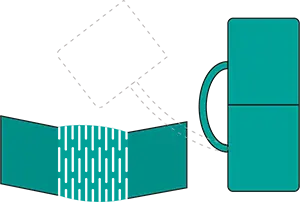
Choosing the right plastic for a living hinge dictate whether your product goes the distance or snaps under pressure. If you are building high-flex moving joints, Nylon 11 is your undisputed champion because it delivers double the stretch of Nylon 12 before breaking. This incredible elasticity gives your design a massive safety margin and keeps internal stress low, making the hinge operation feel beautifully smooth. Think of its molecular structure as a microscopic shock absorber that easily handles intense, repetitive stress.
When printing these parts via SLS, aim for a thickness of 0.8 mm with a generous radius. For the best results, we give the warm hinge a quick manual flex right out of the printer to align the molecules. Stick with Nylon 11, and your single-piece enclosures will happily survive hundreds of cycles without breaking a sweat.
Taper Your Cantilever Beams

Designing a standard cantilever clip should not feel like a high-stakes gamble. If you want to keep your sanity and save your prototypes, make one simple change: stop using straight, uniform beams. A straight beam forces all the stress right into the base, which practically begs the part to break.
Instead, taper the thickness of the clip by 30% to 50% from the base to the tip. This simple trick spreads the bending stress evenly along the entire length. While you are at it, round out the sharp corners at the base with a generous curve. Sharp corners are public enemy number one for flexible plastics. For parts that need to snap open and closed constantly, use Nylon 11. It handles repeated flexing like a champ. Finally, always print these clips flat on the build bed. Printing them standing up forces the bending stress to pull directly against the print layers, causing immediate splitting.
Give Annular Rings Room to Stretch

Round connectors—like bottle caps or ball-and-socket joints—rely on a ring expanding symmetrically to lock into place. Because these joints stretch in every direction at once, your material choice changes the entire game.
If you stick with standard Nylon 12, keep your outer walls balanced so the ring actually expands instead of shearing the locking ridge right off. If you need a deep groove for a heavy-duty, high-interference lock, switch to Nylon 11. Its incredible elasticity lets it stretch over the ridge and snap back without permanently warping. To make assembly smooth, design a shallow entry angle and leave a tiny bit of extra clearance so trapped powder does not ruin your satisfying click. Just like cantilever beams, print these rings flat. Sideways printing forces the expansion tension to rip your print layers apart.
Twist Safely with Torsional Joints
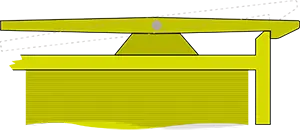
Torsional joints pivot against a twisting rod rather than a bending beam. They rely on the twisting elasticity of a built-in bar to spring back into place, which makes them unique animals to design.
When using Nylon 12, watch the length and thickness of your pivot bar carefully. If it is too short or too thick, it will snap instead of twisting. If your part is going to be clicked and unclicked until the cows come home, use Nylon 11. Its high elongation means it handles repeated twisting fatigue without wearing out or turning to mush. Keep the entry angle shallow so the matching hook can easily twist the mechanism open. Most importantly, print the twisting axis flat on the bed. If you print the shaft standing straight up, the rotational twist will shear the print layers right apart.
Double Your Flex with U-Shapes
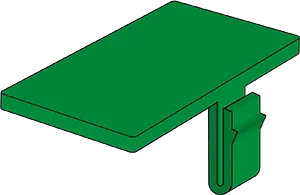
The U-shaped joint is effectively a standard cantilever clip folded back on itself. It is your best friend when you are tight on space but still need plenty of flexibility. By wrapping the beam into a loop, you double its effective length, allowing it to bend safely without requiring a massive footprint.
Standard Nylon 12 works great here because that extra length gives the stiffer plastic enough room to move safely. If you need a clip that lasts forever, switch to Nylon 11. Its exceptional fatigue resistance keeps the curved hinge springy over thousands of cycles. To ensure a long life, use a generous radius on the inside of the curve to eliminate stress concentration points. Print the U-shape flat on the build bed so the bending tension does not pull against the layer lines.
Secure Lids with L-Shaped Latches
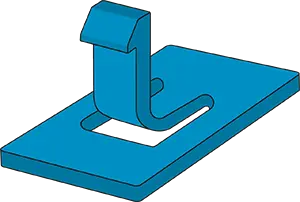
Perpendicular L-shaped latches are perfect for securing sliding panels or enclosure lids. They require a smart approach to flexibility because the hook slides rigidly over a latching edge.
If you are printing with Nylon 12, make sure the mounting wall is thin enough to give the latch some breathing room to flex. For heavy-duty enclosures that technicians will open regularly for maintenance, choose Nylon 11. The extra stretch ensures the locking lip will not snap off after a dozen uses. Design a shallow lead-in angle on the hook for effortless assembly and leave a little extra tolerance in the pocket so trapped powder does not block the mechanism. Always print the latching hook flat to shield the print layers from high shear forces.
Designing moving SLS parts doesn’t have to feel like a high-stakes gamble. Your ultimate survival strategy starts with material choice.
The Ultimate Cheat Sheet
-
Pick PA 2200 (Nylon 12) if you want a clean, bright white look for standard engineering prototypes or rugged end-use parts. It is the dependable workhorse that handles daily wear and tear without breaking a sweat.
-
Switch to PA 2201 (Nylon 12) if you need strict biocompatibility certifications or medical-grade compliance. Because it skips the white pigments entirely, it passes regulatory tests with flying colors. It is also perfect if you just prefer a raw, natural, slightly translucent look.
-
Swap to PA 850-Black (Nylon 11) if you are building functional, moving parts that endure constant impact, mechanical stress, or cyclic loading—like clips, living hinges, or automotive components. It bends instead of snapping, handles fatigue like a champ, and features a solid black finish that hides scratches.
Quick Facts: Nylon 11 & Nylon 12 Comparison
| Selection Criteria | PA 11 (PA 850 Black) | PA 12 (2200 / 2201) |
|---|---|---|
| Material Base | Bio-based polymer (Castor Oil) | Synthetic Polymer (Petroleum-derived) |
| Material Color | Black | Ultra-white / Natural |
| Flexibility | Higher | Lower |
| Strength | Excellent | Very High |
| Moisture Absorbent | Slightly Higher (saturation) | Lower (saturation) |
| Chemical Resistance | Excellence | Excellence |
| Elongation at Break | 150%-180% or Higher (~30%) | 100%-130% or Higher (~18%) |
| Flexural Modulus | Lower (more flexible) | Higher (stiffer) |
| Tinsile Modulus | ~~3500 - 4000 MPa | ~~4000 - 5000 MPa |
| Yield Strain | Higher (more elastic headroom) | Lower (stiffer, deforms earlier) |
| Impact Strength | Extremely High or Superior | Moderate or Good |
| Dimensional Stability | Good | Excellent (lower moisture absorption) |
| Features |
|
|
| Uses |
|
|
NOTE: Avoid GS and CF Nylons: Because they are too rigid and will snap under repetitive bending. | First Bend/Annealing: Immediately after depowdering, we perform a first bend post-processing step by warming the part in hot water and cycling it back and forth—this aligns the molecular structure and improves durability.
Now that you are armed with the ultimate truth of plastics, go forth, conquer your CAD software, and design with total confidence. May your clips never snap, your living hinges bend eternally, and your print layers cling together tighter than awkward family holiday photos. May the 3D-printing gods smile upon your build orientation!
For more information on these materials or to see what else we offer, check out our SLS materials page. Every project is unique, which is why you need to be selective with your materials. If you’re unsure which material is best for your product, we’ll help you determine the right choice. contact our team to witness firsthand how we can bring your imagination to life! Request an SLS 3D printing quote and upload your CAD files today!