
How to Choose the SLS Best Material for Your Design
How to Choose the Best SLS 3D Printing Material for Your Design
Choosing the right SLS 3D printing material can make the difference between a prototype that looks good on a screen and a part that performs in the real world. Strength, flexibility, heat resistance, dimensional stability, appearance, and post-processing requirements all matter.
The good news? You don’t need a materials science degree to make the right choice. Our team can help you match your design requirements with the Selective Laser Sintering (SLS) material that fits your application.
Unfilled Nylon 11: Tough, Flexible, and Built to Take a Beating
Nylon 11 is an excellent choice when durability and impact resistance are priorities. Its combination of strength and elongation helps parts resist cracking and breakage during long-term use, repeated stress, and impact.
Nylon 11 (PA 850 Black) can withstand temperatures up to approximately 390°F and is well suited for demanding functional prototypes and production parts. Its black finish also gives finished components a clean, professional appearance without requiring a trip to the paint booth.
Nylon 12: The Versatile All-Rounder
If you need a dependable material for general-purpose SLS prototyping and production, Nylon 12 (PA 2200 or PA 2201) is hard to beat. It offers an excellent balance of strength, flexibility, lightweight performance, affordability, and chemical resistance.
That versatility makes Nylon 12 3D printing a popular choice for functional prototypes, end-use components, housings, brackets, fixtures, and other complex parts. The material is available in white and can be tumbled, dyed, painted, glued, drilled, tapped, or machined to meet specific design requirements.
Nylon 12 also offers a melting point of approximately 325°F. For applications involving food or beverage contact, material certification and application requirements should always be reviewed before production.
Nylon 12 FR: When Fire Resistance Matters
Some applications need more than strength and flexibility. They need flame-retardant 3D printing materials.
Nylon 12 FR (PA 606-FR) provides many of the familiar performance characteristics of standard Nylon 12 while adding self-extinguishing behavior when exposed to flame. That makes it a strong candidate for applications where flame resistance is an important design requirement, including certain aerospace and automotive components.
The material is available in white and can produce parts with a look and feel similar to standard Nylon 12. When fire performance is on your requirements list, Nylon 12 FR deserves a closer look.
Carbon- and Glass-Filled Nylon: Strength Meets Stability
When your design demands greater stiffness, strength, heat resistance, and dimensional stability, carbon-filled and glass-filled nylon materials bring additional reinforcement to the equation.
These materials (PA 603-CF and PA 640-GSL) can outperform unfilled Nylon 12 in demanding applications where structural performance matters. Carbon-filled nylon can also provide electrical conductivity, depending on the specific material and application.
Neither carbon-filled nor glass-filled nylon should be treated as a flame-retardant material simply because it contains reinforcement. However, these materials can be suitable for demanding unmanned air and ground vehicle applications where strength, heat resistance, and dimensional stability are critical.
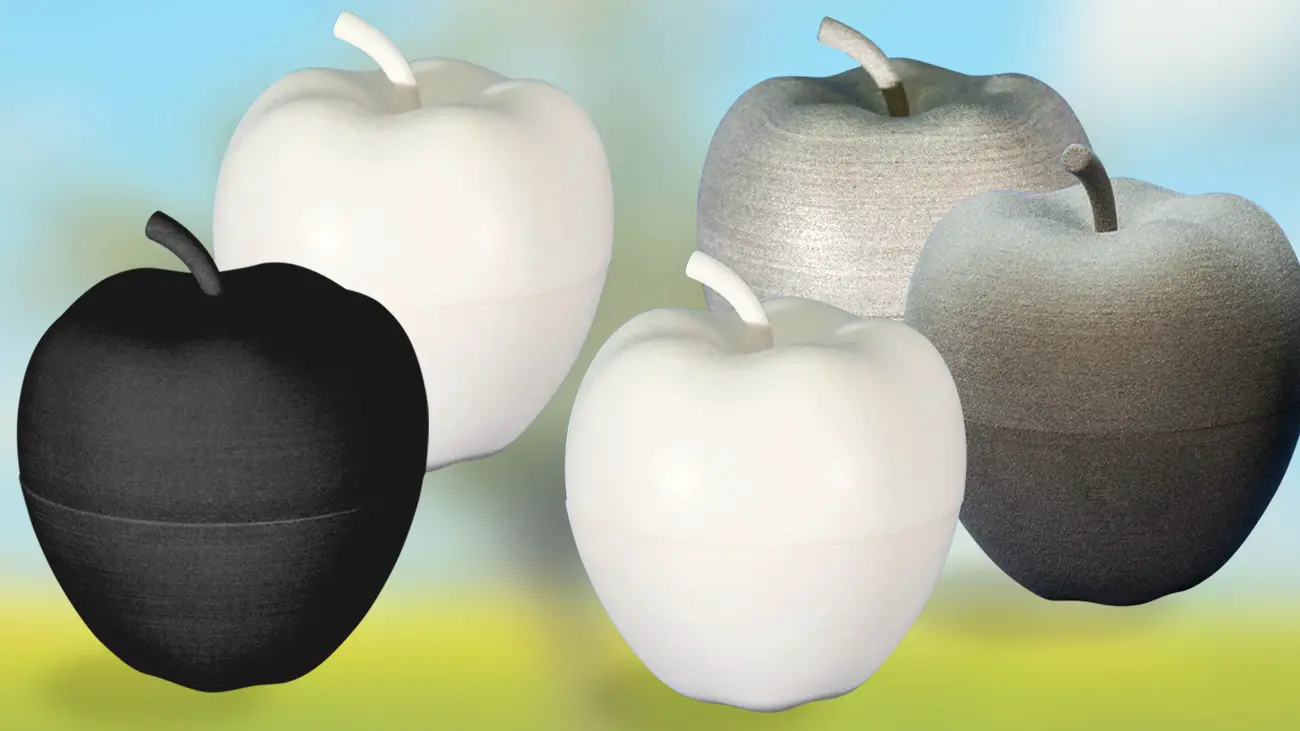
Available finishes include light gray and black, giving you practical options for functional components and production parts.
Alumide®: Metallic Appearance With Machining Options
Want your SLS part to look a little less like it came from a powder bed? Alumide combines polyamide with aluminum particles to create parts with a distinctive metallic appearance and good dimensional stability.
The tradeoff is that Alumide is generally more brittle than standard nylon materials, so it is better suited to applications where stiffness, appearance, dimensional stability, and post-machining are more important than impact resistance.
Its light gray metallic finish provides a neutral appearance, while its machinability makes Alumide an interesting option for parts requiring additional post-processing.
Which SLS Material Is Right for Your Design?
The best SLS 3D printing material depends on what your part needs to do—not simply what it needs to look like. A flexible component may call for Nylon 11. A general-purpose prototype may be better suited to Nylon 12. A fire-sensitive application could require Nylon 12 FR, while a highly rigid structural component may benefit from carbon- or glass-filled nylon.
That’s where material selection gets interesting. And by “interesting,” we mean the good kind—not the kind that shows up three days before your production deadline.
Our team can help you evaluate your design requirements and select the right SLS material for rapid prototyping, functional testing, or low-volume production.
Need Help Choosing an SLS Material?
Every design has different requirements, and choosing the right material early can save time, money, and a fair amount of rework. Explore our SLS 3D printing materials to compare available options, or contact us to discuss your application.
For more information on these materials or to see what else we offer, check out our SLS materials page. Every project is unique, which is why you need to be selective with your materials. If you’re unsure which material is best for your product, we’ll help you determine the right choice. contact us today to witness firsthand how we can bring your imagination to life!
Ready to turn your CAD file into a functional part? Request a quote and upload your file today.